Decree-Law no. 63 of 30 April 2026 (the “third fuel decree”) was converted into Law no. 113 of 25 June 2026, in force from 28 June 2026. The provisions of the subsequent DL no. 89 of 22 May 2026 (the “fourth fuel decree”) were incorporated during the conversion process, with the latter consequently repealed. The law addresses tax payment deferrals, updated deadlines for the rottamazione-quinquies relief extended to local authorities, the fuel tax credit for road haulage, and the obligation to accept electronic payments.
Tax payment deferrals: new deadlines of 20 July and 20 August 2026
Tax payments arising from income tax, IRAP and VAT returns due on 30 June 2026 are deferred to 20 July 2026 without surcharge, or to 20 August 2026 with a surcharge of 0.8%. The deferral applies to taxpayers carrying on activities subject to ISA reliability indices with turnover or fees not exceeding €5,164,569.00, including those under the flat-rate (forfettario) or advantageous tax regimes, and to partners or participants in entities required to declare income on a transparency basis.
Rottamazione-quinquies for local authorities: all deadlines revised
Law 113/2026 extends the deadlines of the rottamazione-quinquies relief previously applied to Regions and local authorities under DL 38/2026. The relief covers tax and non-tax debts assigned to collection agents between 1 January 2000 and 31 December 2023; debts arising from Court of Auditors judgments are excluded. For non-tax administrative fines (including road traffic offences), only interest and accessory charges are waived; the principal penalty remains due in full.
The updated timetable is as follows. Creditor entities must adopt their adhesion resolution and notify the collection agent via certified email (PEC) by 31 July 2026 (previously 30 June 2026). From 15 October 2026 (previously 15 September 2026), eligible debt data will be available in the reserved area of the Agenzia delle Entrate-Riscossione website. Debtor applications must be submitted electronically between 16 October and 15 December 2026 (previously 16 September – 31 October 2026). The communication of amounts due and payment plans will be issued by 28 February 2027 (previously 31 December 2026). Single-instalment payment is due by 31 March 2027 (previously 31 January 2027); alternatively, 54 bimonthly instalments of at least €100.00 each apply, with interest at 3% per annum from 1 April 2027. The first five instalments fall due on 31 March, 31 May, 31 July, 30 September and 30 November 2027; subsequent instalments run bimonthly from 2028 through 2035; the final instalment is due on 31 January 2036.
Fuel tax credit extended to passenger transport operators
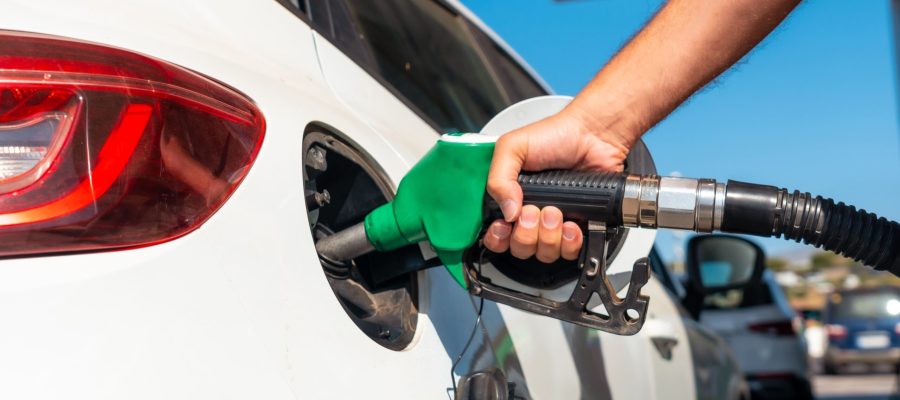
The diesel fuel tax credit, previously available only to freight haulage companies, now also applies to passenger road transport operators and to coach hire companies with driver using vehicles of environmental class Euro V and VI. The credit is calculated on the excess fuel costs incurred from March to June 2026 compared to the February 2026 reference price, within an overall ceiling of €300 million. It must be used exclusively via F24 offsetting by 31 December 2026, is fiscally neutral for income tax and IRAP purposes, and is not subject to standard compensation limits. Implementing criteria will be defined by the Ministry of Infrastructure and Transport.
Reduced excise duty on commercial diesel: tacit approval period halved to 30 days
Transport companies entitled to the reduced excise duty on commercial diesel submit a quarterly declaration to the Customs and Monopolies Agency to obtain a refund in the form of a tax credit usable via F24 offsetting. Under Law 113/2026, the tacit approval (silenzio-assenso) period for compensation requests is reduced from 60 to 30 days. Concurrently, the quarterly declaration must be submitted exclusively by electronic means. Both changes take effect from 1 October 2026.
Electronic payments: obligation extended to e-money instruments
The obligation to accept non-cash payments is refined terminologically: the previous reference to “electronic money” is replaced by “electronic money instruments”, broadening the range of payment tools that obliged parties must accept. The penalty for non-acceptance remains fixed at €30.00 plus 4% of the value of the refused transaction, applicable regardless of the specific payment instrument tendered by the customer.
To assess the impact of these provisions on your business and receive support with compliance, contact Studio RCG.